

THE DISCIPLINE OF OBEDIENCE
John 14:15 "If ye love me, keep my commandments."
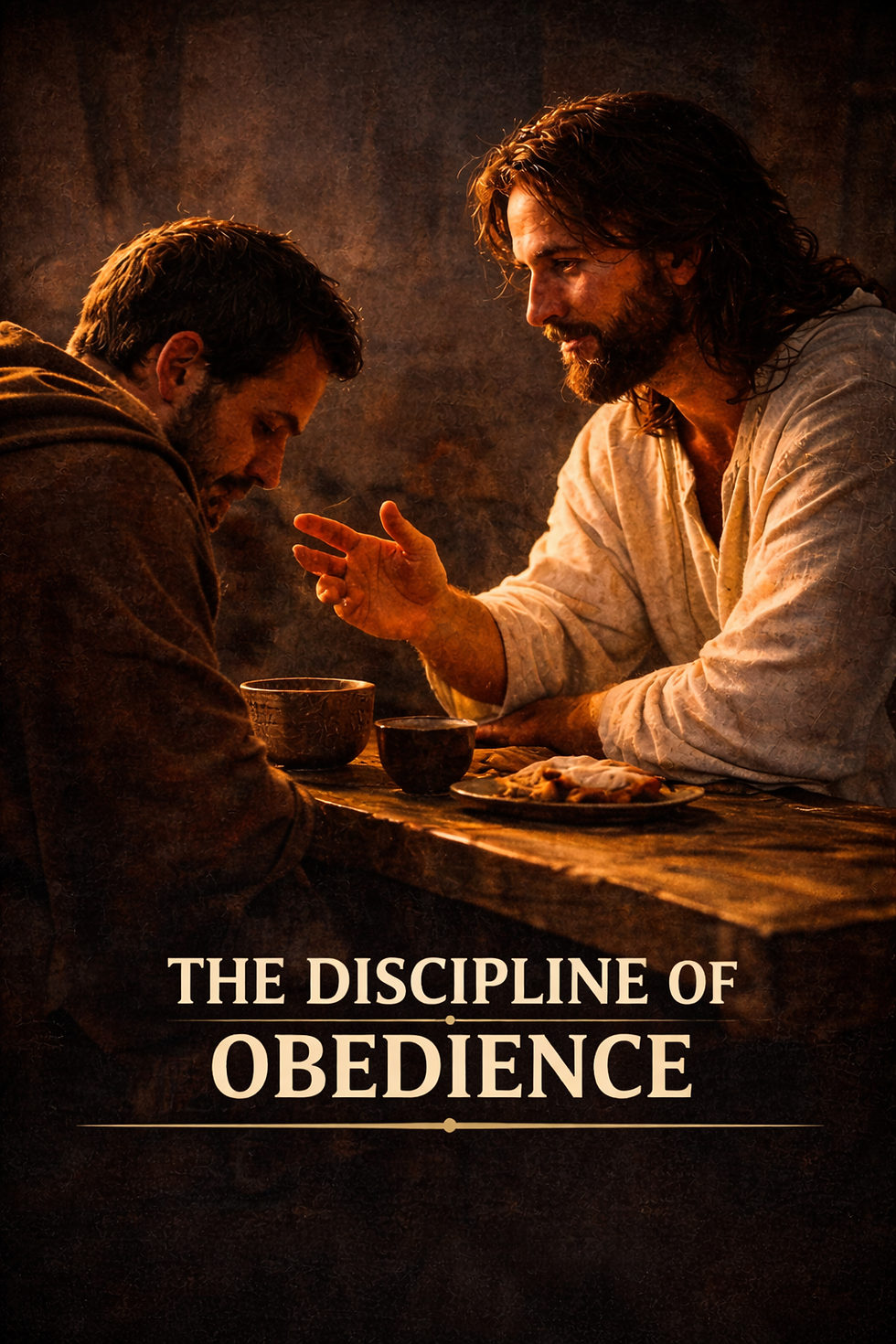
Christ speaks these words in the upper room, hours before the crucifixion. The disciples are troubled, uncertain, and emotionally unstable. Christ does not comfort them with sentiment. He defines love with precision. Love is not declared; it is demonstrated.
1. The Declaration of Love
“If ye love me…”This is conditional language. Love is not assumed; it is tested. Christ does not accept verbal affirmation as proof.
A father measures love not by what a child says but by whether he obeys. Words without obedience are empty.
Luke 6:46 — “why call ye me, Lord, Lord, and do not the things…”1 John 5:3 — “this is the love of God, that we keep his commandments…”
Modern Christianity often defines love emotionally. Scripture defines it behaviourally.
2. The Demand of Love“
…keep my commandments.”The word “keep” means to guard, to observe, to maintain consistently. This is not selective obedience.
Military orders are not optional. Partial obedience is treated as disobedience.
James 1:22 — “be ye doers of the word…”
Deuteronomy 5:33 — “walk in all the ways…”
Selective obedience reveals self-rule. Full obedience reveals submission.
3. The Demonstration of Love
Obedience is visible proof.
Missionaries who left comfort for hardship did not prove love with words but with surrender.
1 Samuel 15:22 — “to obey is better than sacrifice…”
2 John 6 — “this is love, that we walk after his commandments.”
Love that does not result in obedience is counterfeit.
Love is not measured by feeling but by faithfulness.
Challenge
Remove emotional substitutes. Establish obedience as the defining evidence of love.


Comments